


Replacing a flat roof on a Ventura home starts with one decision: which system goes on the roof. Modern Roofing replaces flat and low-slope roofs on homes across Ventura County, and we install the three common residential options: torch-down, TPO and roof coatings. Modern Roofing, Inc. holds California C-39 Roofing Contractor license 807881, first issued May 9, 2002, and serves Ventura, Oxnard, Simi Valley, Thousand Oaks, Ojai and the Conejo Valley.
At a glance
- Pick the system first: torch-down, TPO and a coating fit different roofs, and the right one depends on what is on your roof now.
- Use a coating only on a sound roof: it can extend a dry, intact roof, but it won't fix a failed one.
- Fix the drainage and details: most flat roofs leak at ponding spots, drains, walls, skylights and edges.
- Check Title 24 and the permit: a low-slope reroof may need a cool roof, and the job needs a permit.
- Start with a free inspection: you get a written report with photos before you see a price.
Who Replaces Flat Roofs on Homes in Ventura, CA?
Modern Roofing replaces and repairs flat and torch-down roofs on homes in Ventura and across Ventura County. We also install TPO roofing and roof coatings. Every job is done with permits and by our own in-house crews, and a project manager oversees the whole project.
Plenty of roofers list "flat roofs" in a one-line description, then treat them as commercial work or an afterthought. We do roofing and nothing else: asphalt shingle, tile, flat and torch-down roofs, and flat roofs are work we welcome. We were founded in 2001 by Mario Tudela, and our roofing is done by our own crews, not subcontractors (why that matters). We are bonded with a $25,000 contractor's bond and carry workers' compensation insurance for our roofing employees.
We roof commercial buildings too, but this guide is written for homeowners.
Choosing the Right Flat Roof System
"Flat roof" is a category, not one product. The first decision is the system: torch-down, TPO or a roof coating. The right choice depends on three things: what is on the roof now, how water drains, and what the roof has to do (handle foot traffic, reflect heat, meet a cool roof rule).
Flat roofs are common on Ventura's mid-century and beach-area homes. They also cover additions, ADUs, patio covers and single rooms on many sloped-roof houses. Your flat roof might cover a whole house in Ventura or Oxnard, or just an addition in Simi Valley, Thousand Oaks or Ojai. Either way, the decisions are the same.
Most "flat" roofs are really low-slope roofs. They have a slight pitch that should move water toward drains, scuppers or gutters. When that pitch is lost, or was never right, water sits on the roof, and every system suffers.
Other flat-roof systems exist, including EPDM, PVC, built-up roofing and spray foam. This guide sticks to three common residential choices, so the comparison stays practical.
Because Modern Roofing installs torch-down, TPO and coatings, we can recommend the system your roof needs instead of the one we happen to stock. That matters when you compare bids. If each bid recommends a different system, ask each roofer why their system fits your roof in particular.
Torch-Down vs. TPO vs. Roof Coating: How the Systems Compare
Torch-down is a layered asphalt-based membrane, common on homes and tough under foot traffic. TPO is a light-colored, reflective single-ply membrane with welded seams. A roof coating is a liquid layer applied over an existing roof that is still sound. Torch-down and TPO are replacements. A coating extends the life of a roof that is in good enough shape to keep.
Torch-Down Roofing (Modified Bitumen)
Torch-down is modified bitumen: rolls of asphalt-based membrane blended with polymers and reinforced. The installer heats the underside with a torch so each sheet bonds to the layer below and to its neighbor at the seams, often as a base layer under a cap sheet with a granular surface.
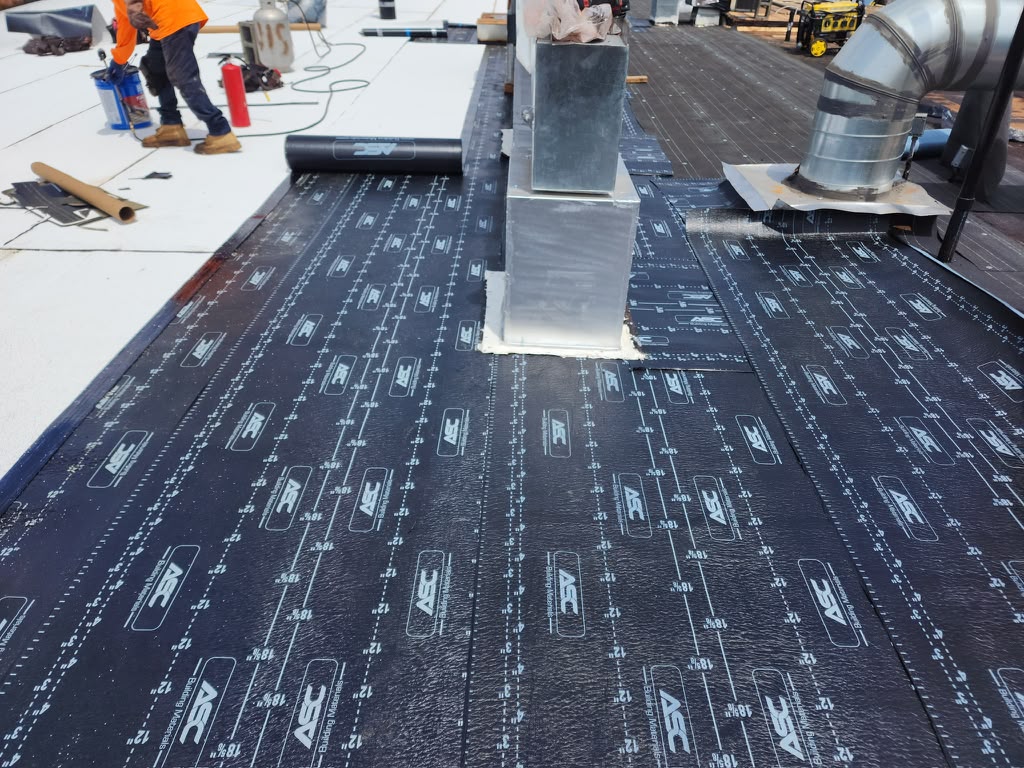
Where it fits: Flat roofs people walk on, flat sections over additions, and roofs with many wall connections, where a thick, layered membrane is forgiving.
One honest limitation: It goes down with an open flame, so the crew has to work carefully near wood, walls and openings. A standard dark cap sheet also absorbs heat. If your reroof has to meet a cool roof requirement, ask whether the cap sheet carries a cool roof rating from the Cool Roof Rating Council.
TPO Single-Ply Membrane
TPO is a single-ply membrane, usually white or light-colored, laid in wide sheets with seams welded by hot air. Its light surface reflects sunlight, which helps keep the rooms underneath cooler.
Where it fits: Larger, open flat roofs, rooms that run hot, and reroofs that need a reflective cool roof surface.
One honest limitation: It is one layer, so everything depends on clean seam welds and careful detailing at walls, drains and skylights. Sharp debris, dropped tools and heavy foot traffic can damage it. If people will be on the roof often, ask about walkways or protection.
Roof Coatings: Restore or Replace?
A roof coating is a liquid applied over an existing flat roof. It cures into a new surface layer, and many coatings are reflective; the Cool Roof Rating Council rates coatings as well as roofing membranes. Modern Roofing installs roof coatings, and we'll also tell you when a coating is the wrong answer.
A coating can make sense when:
- The existing membrane is still attached and mostly intact.
- The deck underneath is solid, and the insulation (if any) is dry.
- Any leaks come from small spots that can be found and repaired first.
- The goal is to extend a sound roof and renew its surface, not to fix a failure.
A coating is the wrong answer when:
- The roof leaks in several places, or no one can find the source.
- The deck is soft or the insulation is wet. A coating seals that moisture in.
- The membrane is blistered, split or pulling away at seams and walls.
- Water ponds in the same spots after every rain, and the slope isn't being corrected.
A coating over a failed roof is money spent on a roof you'll still have to tear off. When the inspection shows the roof is past saving, replacement is the honest recommendation.
Flat Roof Systems at a Glance
| System | What it is | Where it fits on a house | Honest limitation |
|---|---|---|---|
| Torch-down | Layered asphalt-based membrane, heat-fused | Walkable flat roofs, additions, roofs with many wall connections | Open-flame install; dark cap sheets absorb heat unless cool-rated |
| TPO | Light-colored single-ply membrane, hot-air welded seams | Open flat roofs, rooms that run hot, cool roof reroofs | One layer; depends on seam welds and detailing; can be punctured |
| Roof coating | Liquid layer over an existing roof | Sound roofs with a dry deck that need a renewed surface | Not a fix for a failed roof, wet insulation or uncorrected ponding |
Drainage and Details: Where Flat Roofs Actually Leak
Flat roofs usually fail at drainage and details, not in the middle of the membrane. The main causes are ponding water, clogged drains and scuppers, and poor flashing at walls, skylights and edges. Before you hire anyone, ask how they will handle ponding water and each of those details.
Ponding Water
Ponding water is water that sits on the roof long after the rain stops. It usually comes from a sagging deck, low spots, buildup from earlier roofs, or drains and scuppers that are clogged or set too high. Standing water adds weight, wears the surface faster, collects debris and finds any weak seam.
Winter storms, and an El Nino season in particular, can bring a lot of rain at once. A flat roof that ponds in an ordinary storm will be tested hard. If your roof already holds water, fix the cause during the replacement. Don't just lay a new membrane over the same low spots.
Walls, Drains, Skylights and Edges
Leaks are most likely wherever the flat roof meets something else:
- Wall flashings: where the roof meets a parapet, a taller wall, or the main house on an addition.
- Drains and scuppers: the openings that carry water off the roof and into gutters or downspouts.
- Skylights: the curb and flashing around each skylight. An old skylight on a new roof is a common weak spot.
- Edges: the metal and membrane at the roof's perimeter, where wind and water work at the seam.
- Penetrations: vents, pipes and anything else that passes through the roof.
As part of a roofing project, Modern Roofing also handles skylights, gutters and insulation. A skylight that should be replaced can go in with the new roof instead of staying behind as the oldest part of it.
Questions to Ask Any Roofer
Ask these about every flat roof quote you get, ours included:
- How will you deal with the water that ponds on my roof now?
- Will you clear, reset or replace the drains and scuppers?
- How will you flash the walls, the skylights and the roof edge?
- Should my skylights be replaced now, while the roof is open?
- Does this reroof need to meet a cool roof requirement, and does your system meet it?
- Who pulls the permit, and who does the work: your crew or a subcontractor?
- What warranty comes with this system, and where is it written down?
If your flat roof is leaking now, we take leak calls outside office hours and inspect leaks the same day.
Title 24 Cool Roofs and Permits on a Flat Reroof
California's Building Energy Efficiency Standards (Title 24) can require a cool roof when a low-slope roof on a home is replaced. A cool roof is a surface rated to reflect sunlight and release heat. Whether the rule applies depends on factors such as your climate zone and how much of the roof is replaced. Modern Roofing installs cool roofs that meet Title 24 requirements and pulls the permit on every job.
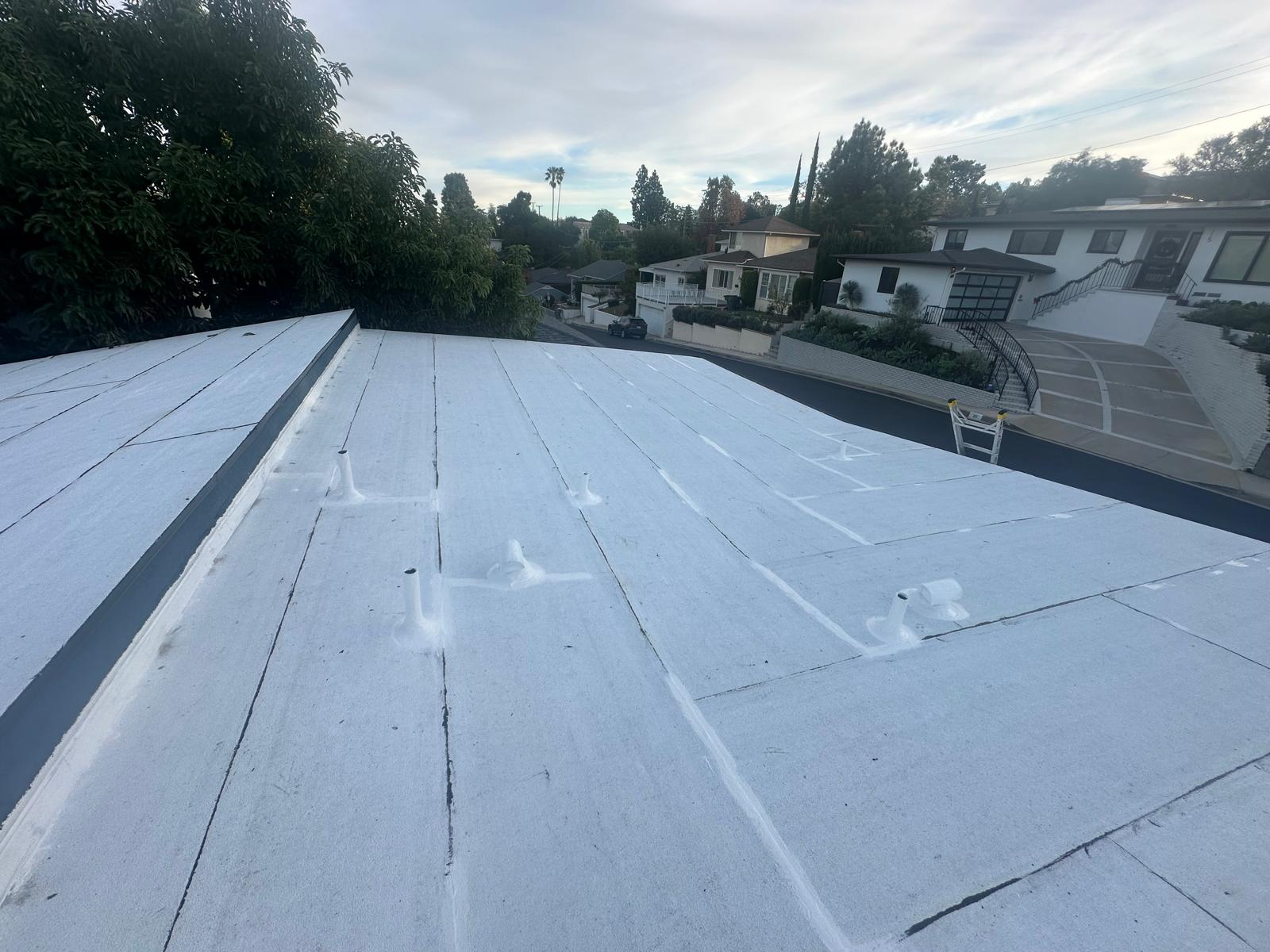
Title 24 sets energy rules for buildings in California, and roofs are part of them. On many low-slope residential reroofs, the new surface has to meet cool roof requirements under the California Energy Commission's Building Energy Efficiency Standards. The details depend on your address, so confirm them with the Energy Commission or your city's building department rather than a rule of thumb.
In practice, TPO's light surface often makes cool roof compliance simple. Torch-down can meet the rule with a cool-rated cap sheet, and a reflective coating may be part of a compliant roof. The Cool Roof Rating Council publishes ratings for roof products, so ask any roofer, us included, which rated product they plan to install.
On permits: replacing a roof generally needs a building permit, and the building department inspects the work. Your city can confirm what yours needs. We do every job with permits and pull the permit ourselves. You pay the permit fee at the end of the job, unless the signed contract says otherwise. A permitted job also leaves you a record of the work when you sell the house.
How We Handle a Flat Roof Replacement in Ventura County
It starts with a free homeowner inspection and a written report with photos, kept separate from the estimate. Next comes a recommendation: torch-down, TPO or a coating, with the reasons. From there, Modern Roofing pulls the permit, tears off and tarps the old roof, and installs the new one with in-house crews under a project manager.
- Free inspection. We give homeowners free roof inspections and estimates.
- Written report with photos. After the inspection, you get a written report with photos of what we found. It is separate from the estimate, so you see the roof's condition before you see a price.
- Options, side by side. When a roof can be repaired, we quote both the repair and a full replacement so you can compare. If your roof is a good candidate for a coating instead of a tear-off, we'll say so. If it isn't, we'll say that too.
- Permit. We pull the permit.
- Tear-off and tarping. On a roof replacement, we tarp every roof after tear-off.
- Installation. Our own in-house crews install the new roof. Skylights, gutters and insulation can be handled in the same project.
- Oversight and cleanup. A project manager oversees the whole project. Cleanup includes a nail magnet sweep and protecting driveways, with a walk around the property at the end.
Flat Roof Questions Ventura Homeowners Ask
These are the decisions Ventura homeowners face most often on a flat reroof: which system to choose, whether to coat or replace, what to do about ponding, Title 24, skylights, section work, permits and warranties.
Is torch-down or TPO better for a flat roof on a house?
Neither is better everywhere. Torch-down is layered and tough, so it suits walkable roofs and roofs with many wall connections. TPO is light-colored and reflective, so it suits open roofs, rooms that run hot and cool roof requirements. The deciding factors are how the roof is used, how it drains and whether a cool roof rule applies. Modern Roofing installs both, so the recommendation follows your roof, not a product line.
Can a coating save my flat roof instead of replacing it?
Sometimes. A coating can extend a flat roof that is still sound: the membrane attached, the deck solid and the insulation dry. It won't fix widespread leaks, wet insulation, a soft deck or ponding that isn't corrected. Modern Roofing installs roof coatings and will tell you which side of that line your roof is on.
Why does water pond on my flat roof, and does it matter?
Water ponds when the deck sags, low spots form, or drains and scuppers are clogged or set too high. It matters: standing water adds weight, wears the surface faster and finds weak seams. A replacement is the time to correct the cause, not just cover it.
Does a flat reroof have to be a cool roof under Title 24?
It may, depending on factors such as climate zone and how much of the roof is replaced. The California Energy Commission publishes the current standards. Modern Roofing installs cool roofs that meet California Title 24 requirements.
Can you replace the skylights at the same time?
Yes. As part of a roofing project, Modern Roofing handles skylights, gutters and insulation. Replacing an old skylight while the roof is open means the new roof isn't flashed around an aging skylight curb.
Can I replace just the flat section of my roof?
In many cases, yes, especially when the flat section sits over an addition or patio. We quote the section and the full roof side by side. Sometimes a full roof costs only a little more than a section, or the underlayment needs replacing anyway. When that's the case, we tell you, so you can decide with both numbers in front of you.
Do you need a permit to replace a flat roof?
Plan on one: a roof replacement generally requires a building permit; your city can confirm. Modern Roofing does every job with permits and pulls the permit itself. You pay the permit fee at the end of the job, unless the signed contract says otherwise.
What warranty comes with a flat roof?
Warranties on flat roofs vary by system, and the terms are set out in the estimate. Repairs carry no warranty. If only a small flat section needs work, note that Modern Roofing's minimum for a roof repair is $2,500. When a repair is possible, we quote it side by side with a full replacement.
Book a Free Flat Roof Inspection in Ventura County
Homeowners in Ventura, Oxnard, Simi Valley, Thousand Oaks, Ojai and the Conejo Valley can book a free roof inspection with Modern Roofing at (866) 409-5086. You'll get a written report with photos and a clear view of your options: torch-down, TPO, a coating or a repair.
A flat roof you won't have to redo starts with knowing what is on the roof now. Call us at (866) 409-5086 or contact us online to book your free homeowner inspection. If a repair is possible, you'll see it quoted next to a full replacement. We offer senior and military discounts, and financing is available on approved credit (OAC), restrictions apply.